
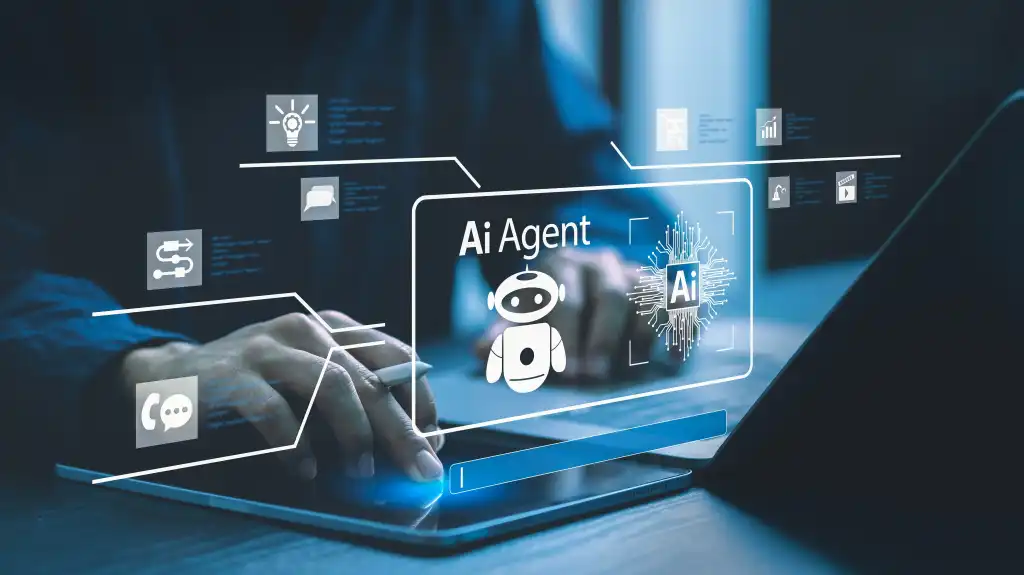
The Rise of Autonomous AI Agents in Modern Business
Artificial intelligence is entering a new phase—one where systems are no longer limited to assisting humans but are capable of acting independently. Autonomous AI agents represent this shift. These systems are designed to observe, decide, and execute tasks without constant human input, enabling businesses to move faster and operate with a level of efficiency that was previously impossible.
Unlike traditional automation tools, which follow predefined rules, AI agents are dynamic and adaptive. They continuously learn from data, adjust their behavior, and optimize outcomes over time. This makes them ideal for complex environments where conditions change rapidly and decisions must be made in real time.
What Makes AI Agents Different
The key difference between standard automation and AI agents lies in decision-making. Traditional systems execute tasks based on instructions, while AI agents evaluate situations and determine the best course of action on their own. This capability allows them to handle multi-step processes, manage workflows, and even collaborate with other agents to achieve larger objectives.
For example, an AI agent in a customer support system can analyze incoming queries, determine urgency, generate responses, and escalate issues when necessary—all without manual intervention. Over time, it improves its accuracy by learning from interactions, making the system more efficient and reliable.

Transforming Business Operations
AI agents are transforming how businesses operate across departments. In sales, they can identify leads, personalize outreach, and manage follow-ups. In operations, they optimize workflows and detect inefficiencies. In finance, they analyze transactions and flag anomalies in real time.
This level of automation goes beyond task execution—it creates systems that think, adapt, and improve. As a result, organizations can reduce operational costs, improve accuracy, and scale their processes without increasing headcount.
The Shift Toward Autonomous Systems
The adoption of AI agents signals a broader shift toward autonomous systems. Businesses are moving from reactive models, where humans respond to events, to proactive systems that anticipate and act before issues arise. This shift is critical in fast-paced industries where speed and precision are key competitive factors.
Autonomous systems also enable better resource allocation. By handling routine and complex tasks alike, AI agents free up human teams to focus on strategy, creativity, and high-impact decision-making.
Challenges and Considerations
While the benefits of AI agents are significant, implementing them requires careful planning. Businesses must ensure data quality, system integration, and proper governance. Without these elements, even advanced systems may fail to deliver expected results.
Security and transparency are also critical. Organizations need to maintain control over how decisions are made and ensure that AI systems operate within defined boundaries. This is where structured AI architecture becomes essential.
Conclusion
Autonomous AI agents represent the next evolution of business intelligence. They move beyond simple automation to create systems that can think, act, and improve independently. For organizations looking to stay competitive, adopting this technology is no longer optional—it is a strategic necessity.
At Winfinity Solutions, we design intelligent agent systems that integrate seamlessly into your business, ensuring scalability, control, and long-term growth. The future belongs to businesses that can operate autonomously while maintaining strategic oversight—and AI agents are the key to making that possible.
Leave a Reply